

Violent crime defense
When the stakes are highest, experience is everything. Respected by judges and prosecutors, Minneapolis defense attorney Thomas E. Harmon V successfully defends clients from murder, assault, robbery, and other violent crime charges in Minnesota and federal courts, including the 8th Circuit.
A murder or assault charge demands an attorney who has been there before — and succeeded.
A violent crime charge carries the most serious consequences in the criminal justice system. The decisions made now — before arraignment, before negotiations, before trial — determine what options remain. Thomas E. Harmon V has tried violent crime cases to verdict. He has litigated every affirmative defense available under Minnesota law. He knows this terrain.
Over 25 years. More than 110 jury trials. Both sides of the system. When the stakes are this high, experience is not optional.
25+ years defending murder, assault, and battery charges in Minnesota
Violent crime defense demands more than legal knowledge — it demands the composure and experience to build a defense under the highest-pressure circumstances and stand behind it before a jury. Thomas has done this for over 25 years.

110+
Jury trials taken to verdict, including violent crimes and homicide
100s
Of hearings won to keep unlawful evidence out
Both Sides
Former prosecutor — knows how the government builds a violent crime case
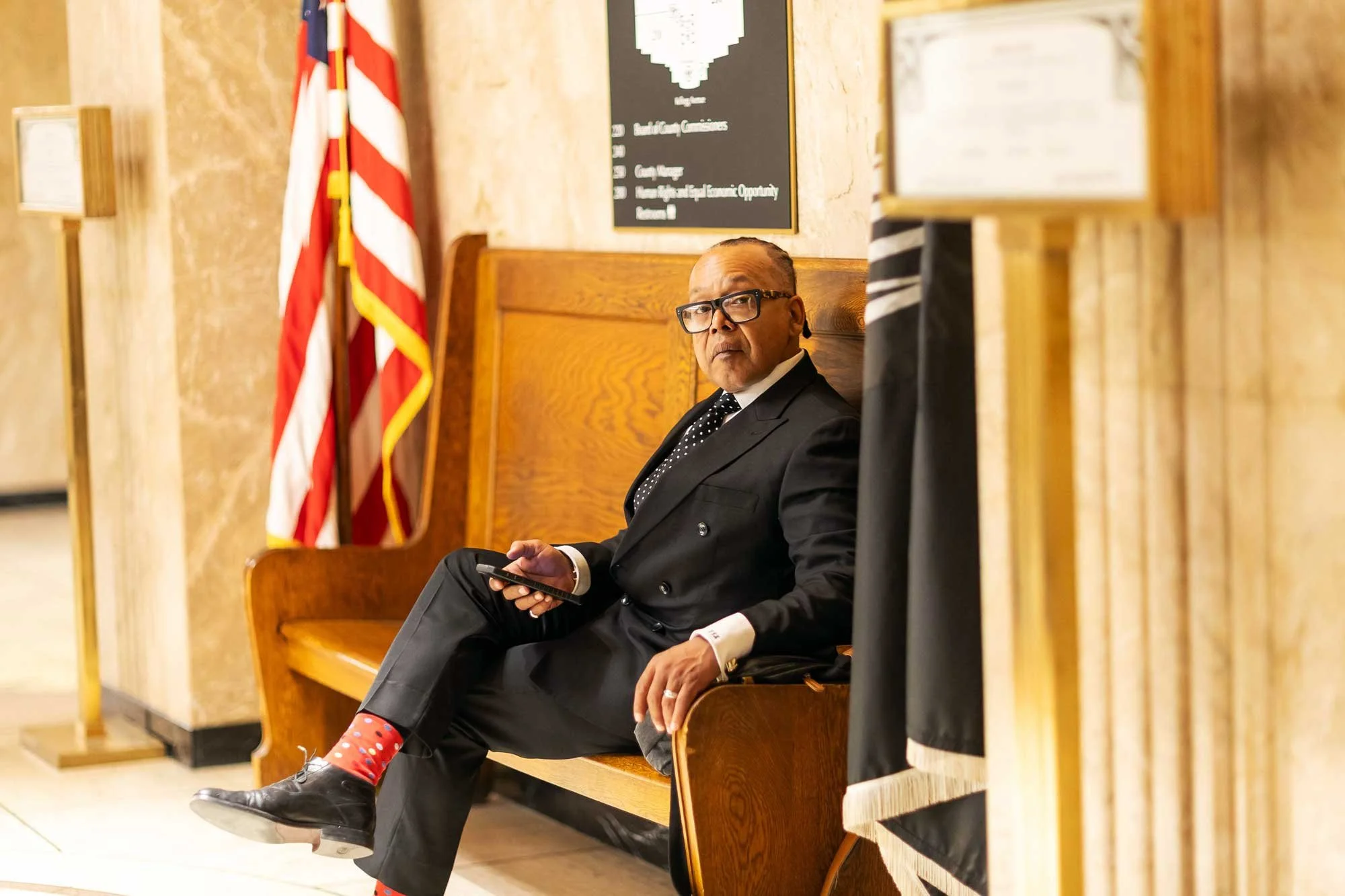
Defending clients against murder, assault, and battery charges
Violent crime cases are decided by the quality of the defense built before and during trial. Affirmative defenses — self-defense, defense of others, duress — require Thomas to present his own evidence and argument, not just poke holes in the prosecution’s case.
That means building the defense from day one.
-
Self-defense is a complete defense to assault and other violent crime charges in Minnesota (Minn. Stat. § 609.06) — but it has specific legal requirements that many people don’t fully understand.
Minnesota has a duty to retreat.
Before using deadly force, you must retreat if it’s reasonably possible — unless you’re in your own home.Minnesota is not a stand your ground state. Being in your home doesn’t automatically make a self-defense claim available. The threat must still be real, imminent, and meet the legal standard.
To establish self-defense under Minnesota law, four elements must be present:
You didn’t start the confrontation
You genuinely believed you were in danger of serious harm or death
That belief was reasonable
You had no reasonable way to retreat.
(See State v. Basting, 572 N.W.2d 281 (Minn. 1997).)
You must use proportionate force.
Self-defense does not permit deadly force in response to a non-deadly threat. You cannot bring a gun to a fist fight and claim self-defense. If the threat was unarmed and the response was lethal, the proportionality element fails. -
If you knew about the alleged victim’s history of violent behavior before the incident, that history may be admissible to support the reasonableness of your fear under State v. Morrison, 351 N.W.2d 359 (Minn. 1984).
Thomas investigates this thoroughly in every self-defense case.
-
You may use reasonable force to protect a third party from serious harm or death — under the same proportionality and duty-to-retreat standards that apply to self-defense.
(Minn. Stat. § 609.065)
-
If you committed an act because someone threatened you with immediate death or serious harm, duress may be a defense — but only if the threat was immediate and you had no reasonable chance to escape.
See State v. Trevino, 441 N.W.2d 435 (Minn. Ct. App. 1989).
Duress is not available as a defense to homicide under Minnesota law.
-
In assault and robbery cases involving brief, chaotic encounters, who did it is frequently the central question.
Thomas challenges eyewitness IDs, lineup procedures, and identifications made under stress or across racial and cultural differences.
-
First-degree murder requires premeditation
Second-degree requires intent
Manslaughter involves a different mental state
Thomas challenges whether the prosecution can actually prove the specific state of mind required for the charge.
-
When an intentional killing occurred in the heat of passion provoked by the victim’s words or conduct, Thomas argues for a first-degree manslaughter instruction (Minn. Stat. § 609.20) — a charge carrying substantially less exposure than murder.
-
Thomas scrutinizes every search of a home, vehicle, or phone, and every custodial interrogation, for constitutional violations that can result in evidence being thrown out.
-
Blood spatter, DNA, ballistics, and cause-of-death opinions can all be challenged.
Thomas retains independent experts when the government’s scientific evidence is contestable.

Trusted.
Violent crime charges Thomas defends
Minnesota’s violent crime statutes span from misdemeanor assault through first-degree murder. Thomas defends clients at every level, in state court throughout Minneapolis, Saint Paul, and Greater Minnesota, and in federal court before the U.S. District Court and 8th Circuit.
-
Premeditated killing. (Minn. Stat. § 609.185)
Mandatory life without parole.
-
Intentional killing without premeditation. (Minn. Stat. § 609.19)
Up to 40 years.
-
Causing death through depraved indifference, or drug delivery resulting in death. (Minn. Stat. § 609.195)
Up to 25 years.
-
Heat of passion killing. (Minn. Stat. § 609.20)
Up to 15 years.
-
Death caused by negligence. (Minn. Stat. § 609.205)
Up to 10 years.
-
Assault causing great bodily harm. (Minn. Stat. § 609.221)
Up to 20 years; 10-year mandatory minimum with a firearm.
-
Assault with a dangerous weapon. (Minn. Stat. § 609.222)
Up to 7 years.
-
Felony down to misdemeanor, depending on the degree of harm. (Minn. Stat. §§ 609.223–609.224)
-
(Minn. Stat. § 609.24)
Up to 10 years.
-
(Minn. Stat. § 609.245)
Up to 20 years; 10-year mandatory minimum with a firearm.
-
(Minn. Stat. § 609.25)
Up to 40 years if the victim is not released safely.
-
(Minn. Stat. § 609.749)
Gross misdemeanor to felony.
-
(18 U.S.C. §§ 16, 924(c))
Mandatory minimum sentences.
Active litigation in the 8th Circuit on what qualifies as a “crime of violence” under United States v. Davis, 588 U.S. 445 (2019).
What’s at stake if you’re convicted
A violent crime conviction restructures your life. At the felony level, the sentencing exposure is severe, and the collateral consequences reach into employment, housing, family relationships, and civil rights.
-
All violent felonies are sentenced under the Minnesota Sentencing Guidelines.
Minnesota sentencing guidelines
Violent crimes sit at the highest severity levels on the guidelines grid (VIII through XI). Any meaningful criminal history produces a presumptive prison sentence.First-degree murder: mandatory life
Second-degree murder: up to 40 years
First-degree assault: up to 20 years with a mandatory 10-year minimum when a firearm is used (Minn. Stat. § 609.11)
Mandatory minimums for gun use
(Minn. Stat. § 609.11)Using a firearm in a violent felony means mandatory 3 years (first offense) or 5 years (second), on top of the underlying sentence
Cannot be reduced
-
A felony conviction means you can never legally own a firearm again under Minn. Stat. § 624.713 and 18 U.S.C. § 922(g)(1).
-
A violent crime felony is permanent on background checks. Security clearances, professional licenses, and regulated employment are all affected.
-
Violent crime convictions trigger mandatory deportation and permanent bars to reentry for non-citizens.
-
A violent crime conviction significantly affects child custody and can result in supervised parenting time or modifications to existing arrangements.
Request a free consultation.
Get an assessment of your case from a criminal defense lawyer with deep experience in both Minnesota and federal courts. Connect with Harmon Law for a consultation and find out where you stand.