

White collar criminal defense
Federal investigators have a head start. Your defense shouldn't wait. A respected, veteran Minneapolis defense attorney, Thomas E. Harmon V, successfully defends clients from fraud, embezzlement, and other white-collar offense charges in Minnesota and federal courts, including the 8th Circuit.
The most important time to hire a defense attorney is before you are charged
White collar investigations don’t start with an arrest. They start with a subpoena, an audit notice, an agency letter, or a call from an investigator. By the time a formal charge is filed, the government has often been building its case for months or years. Thomas engages at the investigation stage — before charges are filed — presenting the defense’s account early, exploring administrative options, and in some cases preventing a criminal charge from being filed at all.
25+ years in criminal defense — including complex federal fraud cases
White-collar defense requires analytical discipline, federal court experience, and the ability to find the defense amid a mountain of documents. Thomas brings all three — built over more than two decades of practice in state and federal court.

110+
Jury trials taken to verdict
Pre-Charge
Investigations resolved without criminal charges filed
Both Sides
Former prosecutor — knows how fraud cases are built and where they can be challenged
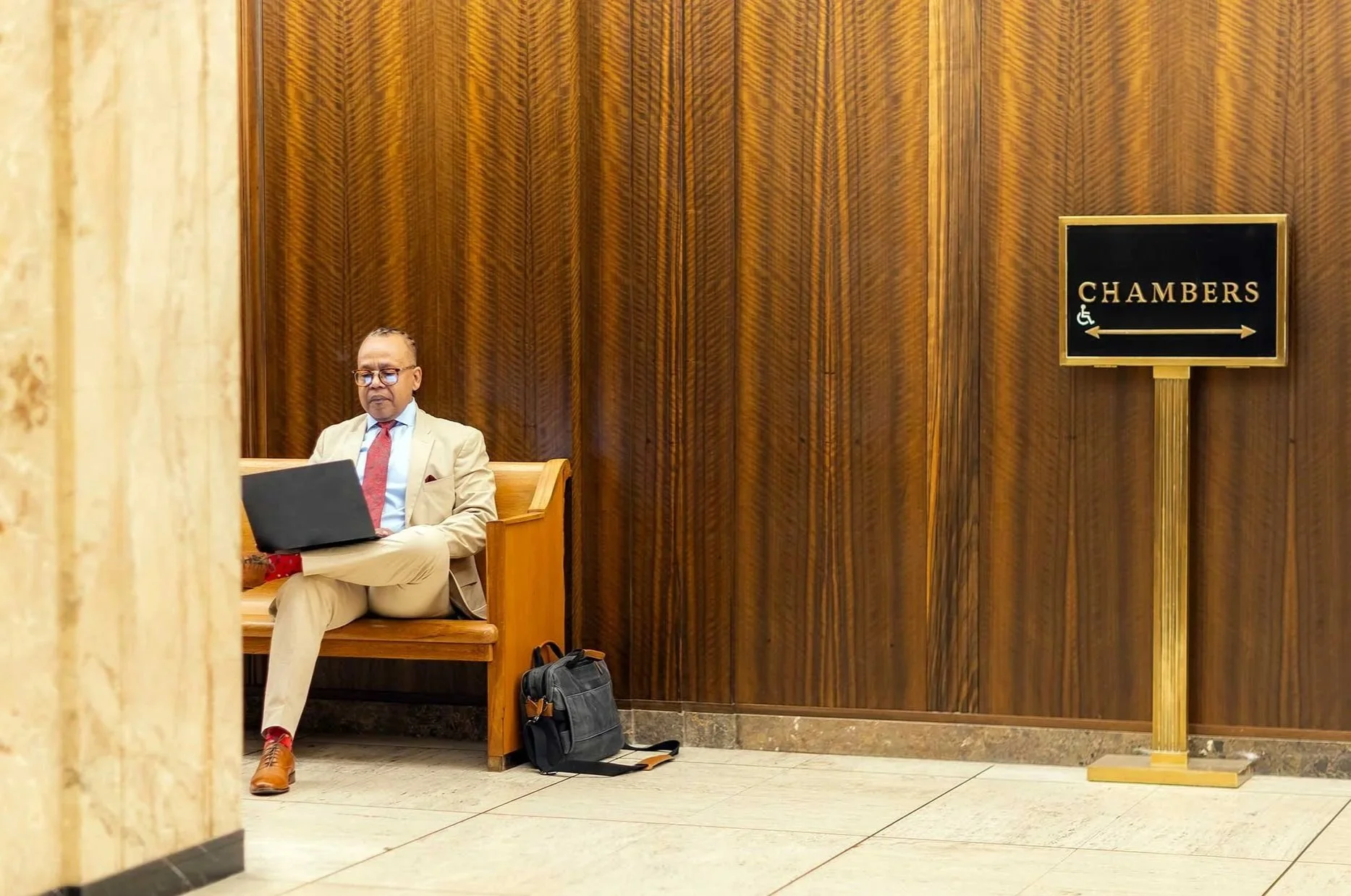
Crafting a strong white-collar crime defense
White collar cases are built on documents, financial records, and patterns of conduct. The prosecution interprets those patterns as evidence of fraud.
Thomas examines the same records to find what the government’s interpretation misses — the legitimate business reasons, the good-faith reliance on instructions or professional advice, and the evidence that what looks like fraud from the outside was not criminal from the inside.
-
Most white collar crimes require proof that you acted knowingly and intentionally — not just negligently or by mistake.
Thomas challenges the government’s circumstantial evidence of intent and presents alternative explanations grounded in the facts: good-faith reliance on billing practices, employer instructions, legal advice, or established procedures.
-
Prosecutors often argue that even without direct knowledge of fraud, you “should have known”.
This is a legal theory called constructive knowledge or willful blindness. (See Global-Tech Appliances, Inc. v. SEB S.A., 563 U.S. 754 (2011).)
Thomas challenges this inference by showing you didn’t take steps to avoid learning the truth — and had no reason to believe anything was wrong.
-
Owners, supervisors, and administrators can face criminal liability for fraud committed by people they employ.
Thomas challenges the scope of your actual knowledge, the reasonableness of your oversight, and whether the conduct was truly authorized or foreseeable.
-
When an investigation is at an early stage, Thomas engages with the charging agency to present the defense’s account of the evidence, explore whether an administrative resolution is possible, and — where the facts support it — prevent a criminal referral.
-
White-collar cases can involve hundreds of thousands of documents.
Thomas reviews the record to find what supports the defense — the emails that show good faith, the billing records that reflect legitimate services, the communications that show you followed instructions.
-
White collar investigations frequently involve the seizure of computers, business records, and financial documents.
Thomas scrutinizes every warrant for probable cause deficiencies, overbroad authorization, and searches that went beyond what the warrant allowed.
-
Federal white-collar cases often rely on people who pleaded guilty and agreed to testify against others in exchange for a lighter sentence.
Thomas cross-examines cooperating witnesses on their motive to shade the truth, the specific benefits they received, and inconsistencies in their accounts.
-
In federal court, the government’s calculation of how much money was lost is one of the most important numbers in the case — it directly determines the recommended sentence under USSG § 2B1.1.
Loss over $1.5 million adds 16 offense levels. Loss over $65 million adds 22 levels. Each two-level increase roughly doubles the sentencing range.
Thomas challenges loss calculations that overstate the actual harm, include amounts not attributable to the defendant, or use flawed methodology.

Trusted.
White collar charges Thomas defends
White collar criminal cases span state and federal courts — from Minnesota theft and fraud statutes to federal wire fraud, mail fraud, and healthcare fraud prosecutions before the U.S. District Court.
Thomas defends clients from the investigation stage through trial and appeal.
-
Taking property by intentional deception. (Minn. Stat. § 609.52, subd. 2(3)–(4))
Graded by value up to a 20-year felony.
-
Fraudulent claims to health programs. (Minn. Stat. § 609.466 / 18 U.S.C. § 1347)
State: up to 5 years.
Federal: up to 10 years; up to 20 if serious injury results. -
Federal Anti-Kickback Statute and False Claims Act. (42 U.S.C. § 1320a-7b)
Both criminal and civil liability.
-
Using electronic communications to defraud (18 U.S.C. § 1343)
Up to 20 years.
-
Using the mail to defraud. (18 U.S.C. § 1341)
Up to 20 years. One of the most broadly charged federal offenses.
-
Defrauding a financial institution. (18 U.S.C. § 1344)
Up to 30 years.
-
(18 U.S.C. §§ 1956–1957 / Minn. Stat. § 609.671)
Up to 20 years federal.
-
(26 U.S.C. § 7201 / Minn. Stat. § 289A.63)
Up to 5 years federal; state gross misdemeanor to felony.
-
(Minn. Stat. § 609.527 / 18 U.S.C. § 1028A)
Federal aggravated identity theft adds a mandatory 2-year consecutive sentence.
-
Theft by someone in a position of trust.
18 U.S.C. § 666 / Minn. Stat. § 609.52Federal: up to 10 years.
-
(18 U.S.C. § 1348 / Minn. Stat. § 80A.68)
Up to 25 years federal.
Received a subpoena, audit notice, or call from an investigator?
That is the signal to contact Thomas immediately. Do not respond to investigators, produce documents, or make any statements without first speaking with a criminal defense attorney.
Administrative Resolution Before Criminal Referral
State and federal agencies — including the Minnesota Department of Human Services, Medicaid, Medicare, and the Office of Inspector General — sometimes resolve fraud allegations through administrative processes rather than criminal prosecution. Whether that option exists depends entirely on the agency and the facts of your situation.
Thomas assesses the realistic options and engages with the agency at the stage when that engagement can still make a difference.
Proffer Agreements
In federal investigations involving multiple targets, investigators sometimes offer a proffer agreement — a limited arrangement where you can speak with investigators with some protection from how your words are used.
A proffer is not a free pass. Statements made in a proffer session can be used to challenge your testimony at trial and to open new lines of investigation.
Thomas evaluates every proffer offer carefully before any engagement with federal investigators.

Personal care attendants and healthcare fraud:
When workers are charged for following instructions
Personal care attendants and home health aides are among the most frequently targeted individuals in state and federal healthcare fraud investigations. Their names appear on billing records — making them easy targets, even when the billing practices they followed were established by their employer.
Minnesota’s Medicaid program (Minn. Stat. § 256B) and related federal programs are among the most investigated for fraud in the state. PCAs can be charged with theft (Minn. Stat. § 609.52) or healthcare fraud (Minn. Stat. § 609.466) for billing records that show claims for services allegedly not provided — even when the worker had no independent reason to believe the billing was wrong.
If you’re a PCA or home health worker who has received notice of an investigation or billing audit: Don’t speak to investigators without an attorney. Your employer’s billing practices are not automatically your criminal liability. Thomas can establish that record before charges are filed.
What a white-collar conviction actually costs you
White collar convictions carry consequences that can exceed the criminal penalty itself — the loss of your professional standing, the restitution obligations, and the civil exposure can be more devastating than any prison sentence.
-
Federal wire and mail fraud: up to 20 years per count
Bank fraud: up to 30 years
Healthcare fraud: up to 10 years
Sentences are driven by the amount of money involved, calculated under USSG § 2B1.1.
-
Federal courts must order full repayment of victim losses under the Mandatory Victims Restitution Act (18 U.S.C. § 3663A).
State courts order restitution under Minn. Stat. § 611A.04.
These obligations survive bankruptcy in most circumstances.
-
The government can seize property connected to fraud — bank accounts, real estate, vehicles — under 18 U.S.C. §§ 981–982.
This can happen before conviction through civil forfeiture.
-
Fraud convictions result in mandatory revocation of licenses in law, medicine, accounting, finance, real estate, and virtually every regulated profession.
-
Conviction for healthcare fraud or government contracting fraud can permanently bar participation in federal programs — including Medicaid and Medicare.
-
Fraud convictions can qualify as aggravated felonies under federal immigration law, triggering mandatory deportation.
Request a free consultation
The criminal defense attorney you retain can be the difference in your outcome. Harmon Law invites you to meet with Thomas to discuss the details of your case.